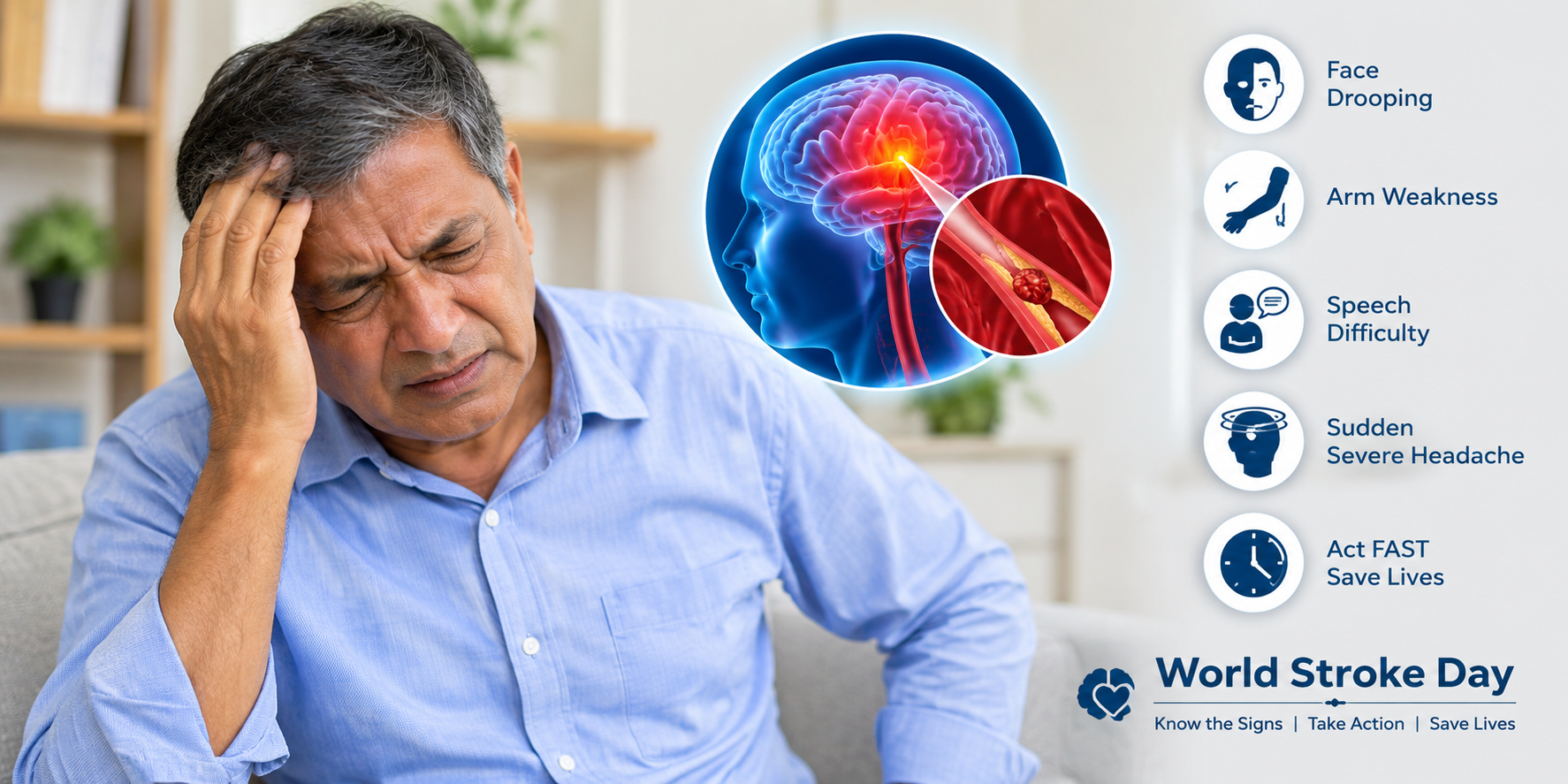
World Stroke Day: Date, Importance, Symptoms and Simple Ways to Prevent Stroke
Thank you for reading this post, don't forget to subscribe!Introduction
World Stroke Day is observed every year on October 29 to raise awareness about stroke, its warning signs, prevention, and treatment. A stroke is a serious medical condition that occurs when the blood supply to part of the brain is interrupted or when a blood vessel in the brain bursts. Without quick treatment, a stroke can cause permanent disability or even death.
World Stroke Day reminds people that understanding the symptoms and adopting healthy habits can help save lives.
What Is a Stroke?
A stroke occurs when brain cells do not receive enough oxygen and nutrients because of a problem with the blood supply. There are two main types of stroke. An ischemic stroke happens when a blood clot blocks a blood vessel supplying the brain. A hemorrhagic stroke occurs when a blood vessel in the brain breaks and causes bleeding.
High blood pressure, diabetes, high cholesterol, smoking, physical inactivity, and certain heart conditions can increase the risk of stroke.
Importance of World Stroke Day
World Stroke Day spreads awareness about the importance of early diagnosis, emergency medical care, rehabilitation, and prevention. Many people do not recognize stroke symptoms immediately, which can delay life-saving treatment.
This day encourages individuals, families, schools, workplaces, and healthcare organizations to share information about stroke prevention. It also reminds us to support stroke survivors as they recover and adapt to everyday life.
Warning Signs of Stroke
Recognizing stroke symptoms quickly is extremely important. Remember the word FAST:
- F – Face: One side of the face may droop.
- A – Arms: One arm may become weak or difficult to lift.
- S – Speech: Speech may become unclear or difficult to understand.
- T – Time: Call emergency services immediately.
Other warning signs include sudden loss of vision, dizziness, difficulty walking, loss of balance, confusion, or a sudden severe headache.
If you notice these symptoms, seek emergency medical help immediately, even if they disappear after a few minutes. Do not wait for the symptoms to improve or attempt to treat the person at home.
Simple Ways to Prevent Stroke Nowadays
- Control blood pressure: High blood pressure is a major risk factor for stroke. Check your blood pressure regularly and follow your doctor’s advice.
- Eat a balanced diet: Include vegetables, fruits, whole grains, beans, and other nutritious foods. Reduce excessive salt, sugary foods, and foods high in unhealthy fats.
- Exercise regularly: Aim for at least 150 minutes of moderate physical activity each week, if your health allows. Walking, cycling, swimming, and dancing are useful options.
- Avoid smoking: Smoking damages blood vessels and increases stroke risk. Seek professional support if you need help quitting.
- Limit alcohol: Avoid excessive alcohol consumption, which can raise blood pressure and contribute to other health problems.
- Manage diabetes and cholesterol: Have regular health check-ups and take prescribed medicines as directed.
- Maintain a healthy weight: Combine nutritious meals with regular physical activity to support heart and blood vessel health.
- Sleep well and manage stress: Maintain a regular sleep routine and use healthy stress-management methods, such as walking, relaxation, or meditation.
- Follow medical advice: Certain heart conditions, including atrial fibrillation, increase stroke risk. Discuss your personal risk factors with a healthcare professional.
How Can We Observe World Stroke Day?
People can observe World Stroke Day by organizing awareness programmes, sharing educational articles, arranging health check-ups, and teaching family members how to recognize stroke symptoms. Schools and workplaces can also conduct simple awareness activities.
Conclusion
World Stroke Day is an important reminder that stroke prevention starts with everyday choices. Controlling blood pressure, eating healthy food, exercising regularly, avoiding smoking, and managing existing health conditions can reduce the risk of stroke. Most importantly, recognizing warning signs and getting emergency treatment quickly can save lives. Let us spread awareness and encourage everyone to take better care of their brain health.